
In a world filled with deadlines, notifications, and endless to-do lists, finding ways to slow down and recharge is more important than ever. One of the simplest and most rewarding ways to care for your mental well-being is by developing a creative hobby. Whether you’re painting, sketch journaling, knitting, crocheting, building a model, embroidering, sculpting, or simply doodling in a notebook, creative activities offer far more than something to display on a shelf.
The greatest benefit isn’t creating a masterpiece—it’s the act of making.
Many people avoid creative hobbies because they believe they “aren’t artistic enough” or worry their finished project won’t be good enough. The truth is, creativity isn’t about perfection or producing gallery-worthy work. It’s about giving yourself permission to slow down, engage your hands and mind, and enjoy the process. Every brushstroke, stitch, sketch, or carefully assembled model is an opportunity to reduce stress, improve focus, and reconnect with the present moment.
Making Things Helps Quiet a Busy Mind
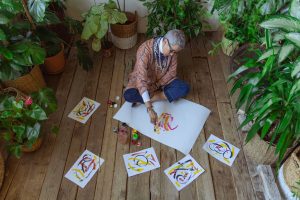
When life feels overwhelming, our minds often race from one worry to the next. Creative hobbies provide a healthy way to interrupt that cycle. As your attention shifts toward mixing paint, turning the pages of a sketch journal, counting knitting stitches, or carefully fitting together model pieces, your thoughts naturally begin to settle.
This gentle focus allows your brain to take a break from constant problem-solving and multitasking. Many people experience what psychologists call a “flow state”—that wonderful feeling where time seems to disappear because you’re completely absorbed in what you’re doing.
The project itself doesn’t have to be complicated. Even spending 20 or 30 minutes creating something with your hands can help lower stress and leave you feeling calmer than when you started.
Progress Matters More Than Perfection
One of the biggest misconceptions about hobbies is that every project needs to turn out beautifully. Social media often showcases polished artwork, flawless embroidery, and perfectly painted miniatures, making it easy to believe that’s the standard everyone should meet.
It isn’t.
The mental health benefits of creative hobbies come from participating—not from achieving perfection. A crooked stitch, an uneven paint stroke, a sketch that doesn’t quite capture what you imagined, or a model with a few visible glue marks doesn’t diminish the value of the experience.
Every creative session is time spent away from stress, screens, and daily pressures. Each project teaches patience, builds confidence, and reminds us that mistakes are simply part of learning. Sometimes the most meaningful creations are the imperfect ones because they represent growth rather than perfection.
Creativity Improves Focus
Modern life constantly competes for our attention. Emails, messages, and social media encourage us to jump rapidly from one task to another. Creative hobbies encourage the opposite by asking us to concentrate on one thing at a time.
Painting encourages observation of light, color, and texture. Embroidery requires patience with every stitch. Knitting and crocheting develop a comforting rhythm that many people find deeply relaxing. Sketch journaling combines drawing and writing to help organize thoughts while recording everyday experiences. Building scale models requires careful planning, attention to detail, and steady hands. Sculpting invites you to shape and refine an idea one step at a time.
These activities gently strengthen concentration while giving your mind a welcome break from digital distractions.
Creativity Encourages Mindfulness
Mindfulness simply means paying attention to the present moment, and creative hobbies naturally encourage this way of thinking.
As you turn the pages of your sketch journal, choose yarn colors for a crochet project, smooth clay between your fingers, or carefully paint the details on a model airplane, your attention becomes centered on what you’re doing right now instead of worrying about yesterday or tomorrow.
The repetitive motions found in knitting, crocheting, embroidery, and even sanding or assembling model parts can be surprisingly calming. Likewise, painting, journaling, and sculpting encourage you to slow down and appreciate the creative process rather than rushing toward the finish line.
The result is often a quieter mind and a greater sense of peace.
Find the Hobby That Speaks to You
There is no single “best” creative hobby. The right one is simply the one that makes you look forward to spending time creating.
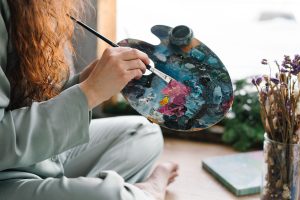
Painting gives you the freedom to experiment with color, texture, and expression. Every canvas is an opportunity to explore without worrying about perfection.
Sketch journaling combines drawing, writing, watercolor, collage, or simple doodles into a personal record of everyday life. It encourages observation, gratitude, and reflection while creating lasting memories.
Embroidery offers a slow, relaxing pace where every stitch contributes to something uniquely handmade. Its repetitive rhythm makes it especially enjoyable after a busy day.
Knitting and crocheting provide both creativity and comfort. The repetitive motions can become wonderfully meditative, while each completed row offers a satisfying sense of progress.
Model building rewards patience and careful attention to detail. Whether assembling classic cars, ships, trains, aircraft, science fiction models, or miniature buildings, the process encourages focus and problem-solving while providing a welcome escape from everyday stress.
Sculpting offers a hands-on experience that allows you to shape ideas into physical form. Working with clay engages both your creativity and your sense of touch, making it a particularly grounding activity.
Whatever hobby you choose, remember that the finished piece is only part of the journey. The real reward is the time spent creating.
Create a Space That Invites Creativity
You don’t need a dedicated art studio to enjoy creative hobbies. A small table by a window, a corner of your dining room, or a portable craft box can become the perfect creative retreat.
Keep your favorite supplies organized and easy to reach so it’s simple to begin whenever inspiration strikes. Good lighting, a comfortable chair, and a tidy workspace can make creative sessions more enjoyable.
Consider adding a few personal touches—a favorite mug of tea, a small plant, soft background music, or a scented candle—to create an atmosphere that helps you relax.
Most importantly, make your workspace feel welcoming rather than intimidating. It should be a place where experimentation is encouraged and mistakes are welcomed as part of the creative process.
Make Time to Create
Creative hobbies don’t require hours of free time. Even setting aside 15 to 30 minutes a few evenings each week can have a positive impact on your mood and overall well-being.
Keep a knitting project beside your favorite chair, carry a sketch journal in your backpack, leave a model kit on your workbench, or keep a small watercolor set ready for whenever inspiration strikes. The easier it is to begin, the more likely creativity will become part of your routine.
Don’t worry about finishing every project quickly. Some hobbies are meant to unfold slowly, giving you repeated opportunities to relax each time you return.
Final Thoughts
Creative hobbies remind us that not everything we do has to be productive, profitable, or perfect. Sometimes the simple act of making something with our own hands is enough.
Whether you’re filling the pages of a sketch journal, knitting a cozy scarf, crocheting a blanket, painting a landscape, embroidering a favorite design, building a scale model, or sculpting with clay, the true value lies in the experience itself. Every moment spent creating is a moment spent investing in your mental well-being.
So don’t worry if your painting isn’t museum-worthy, your stitches aren’t perfectly even, or your model isn’t competition-ready. Those things aren’t what matter most.
What matters is that you took the time to create, to slow down, and to give your mind the opportunity to rest. In the end, that’s the masterpiece worth making.




0 Comments